The Monogram Penthouse

The Monogram Penthouse

NEW YORK

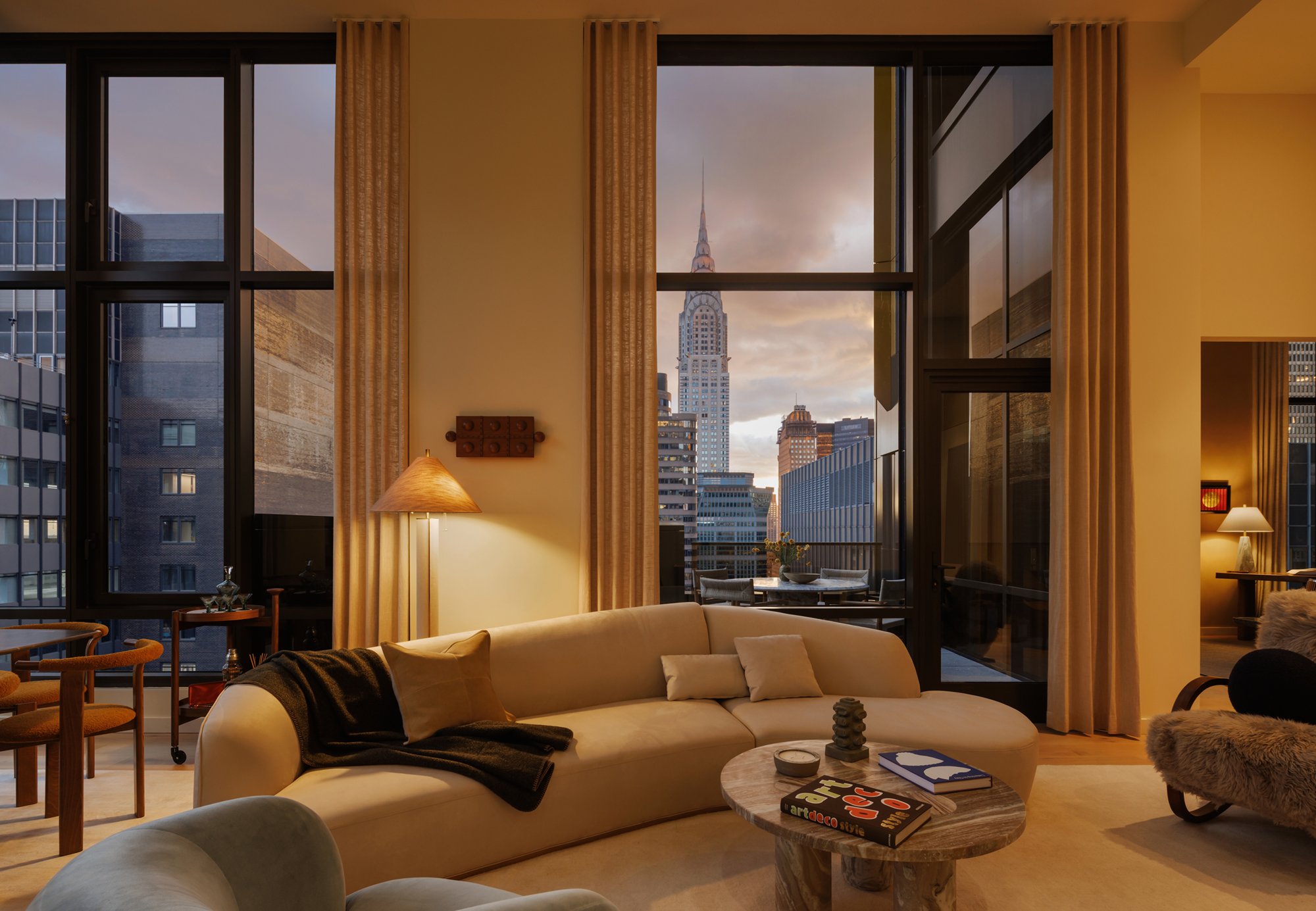
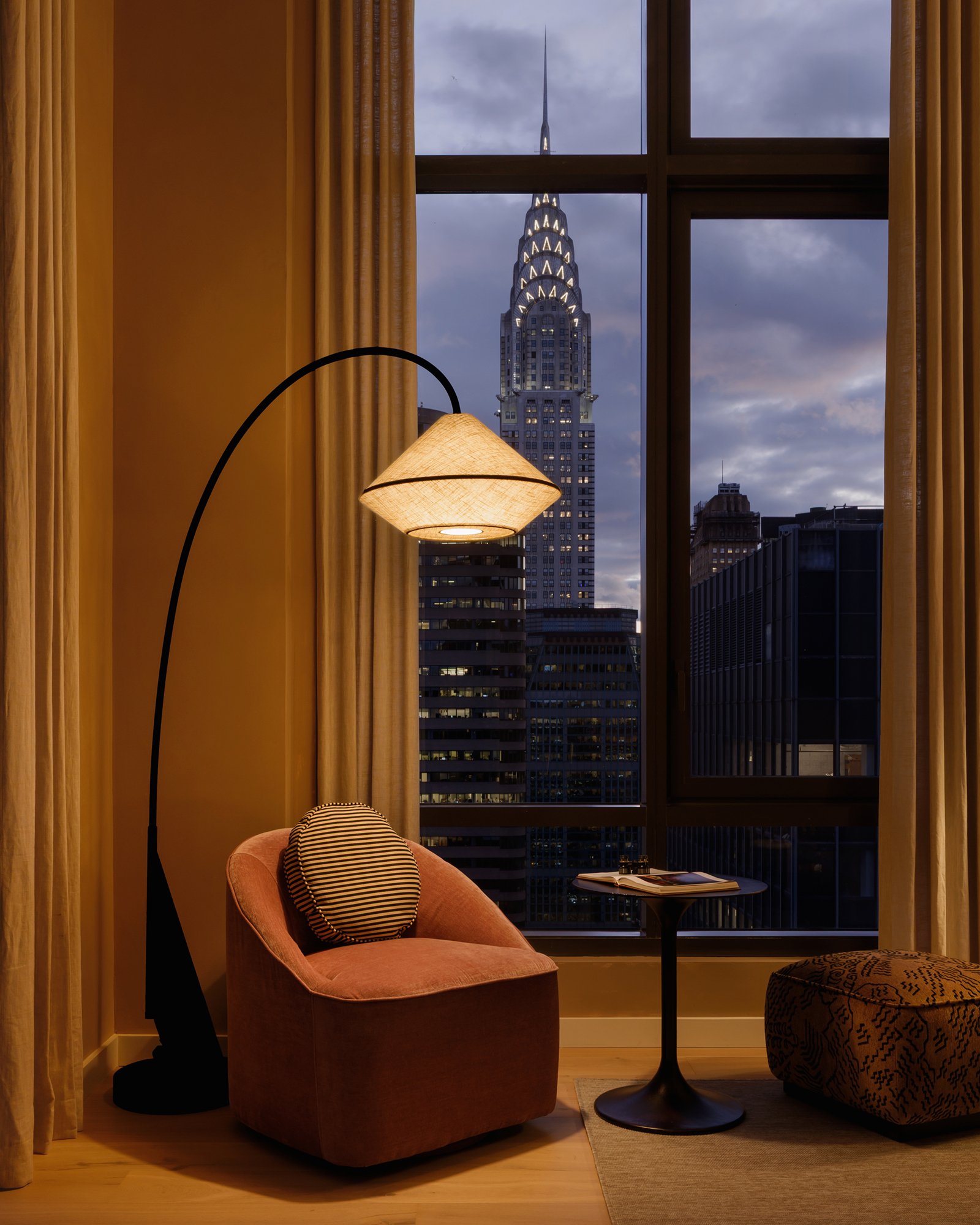
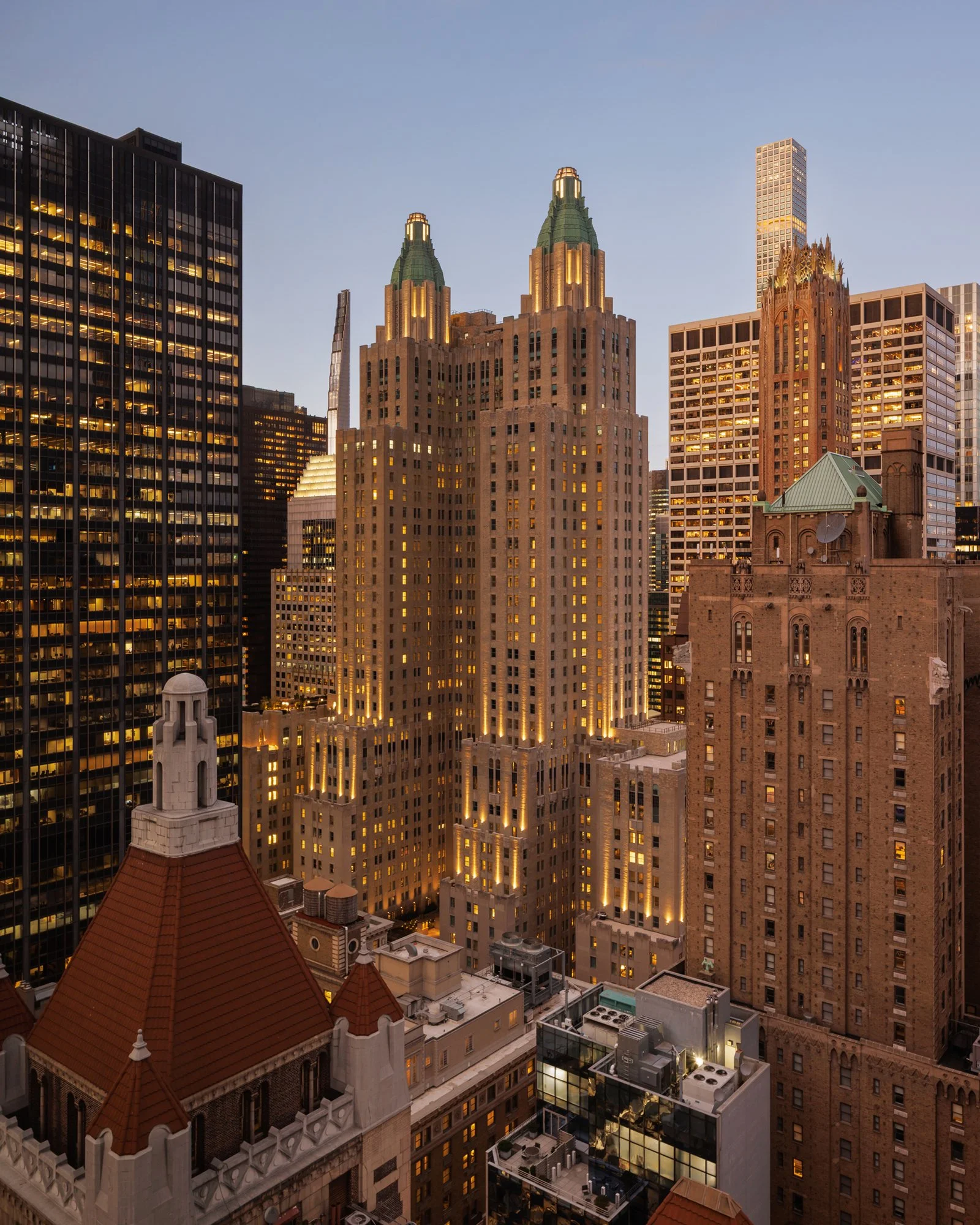
Suspended high above Midtown, the Penthouse at Monogram is not simply a residence — it is an atmosphere. A study in contrasts between the energy of Manhattan and the stillness of elevation.

Within Neri & Hu’s architecture of light, rhythm, and material honesty, frenchCALIFORNIA has created an environment where design, art, and emotion converge — a sanctuary of proportion and quiet expression.

 

A SKYWARD COMPOSITION BY FRENCHCALIFORNIA

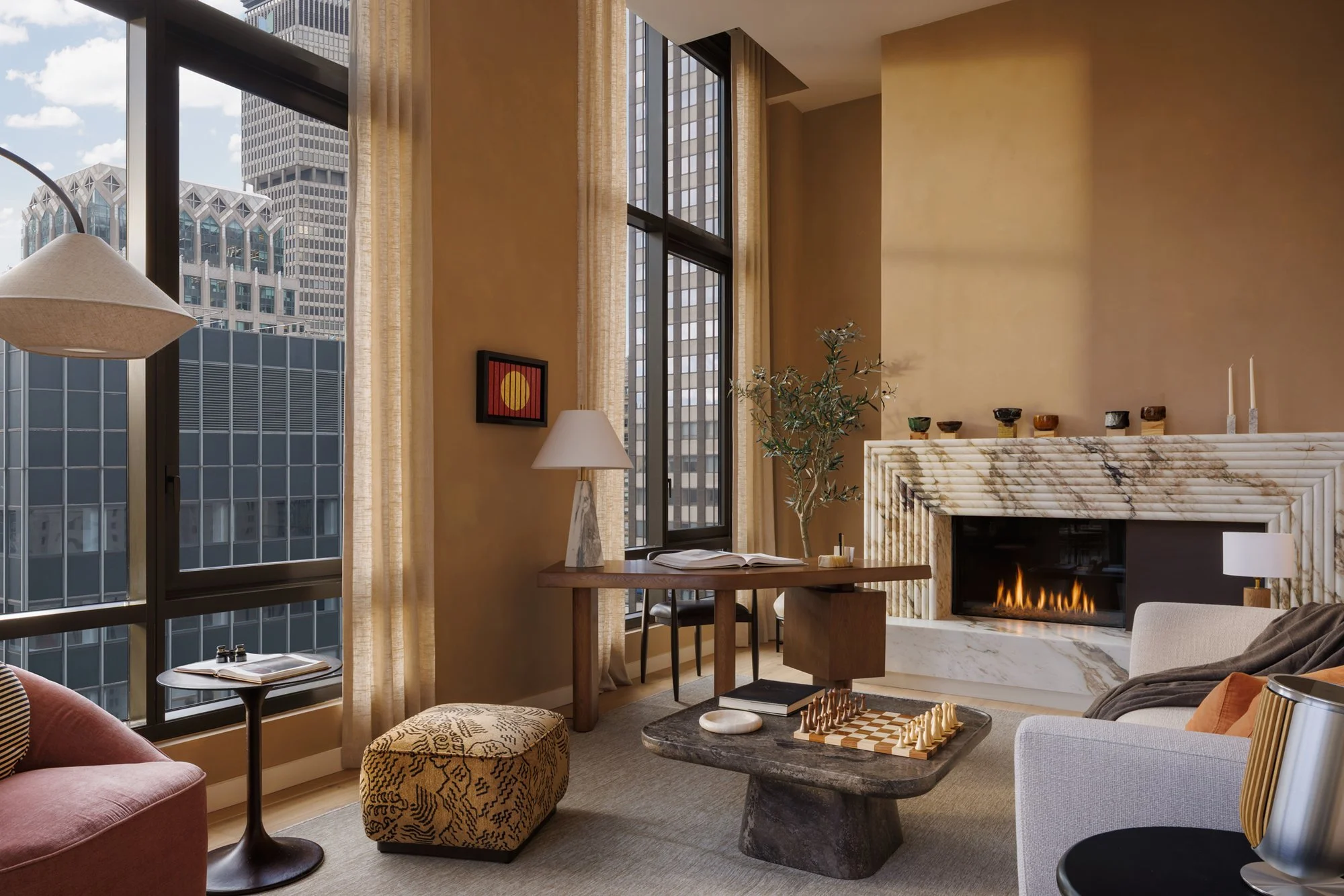
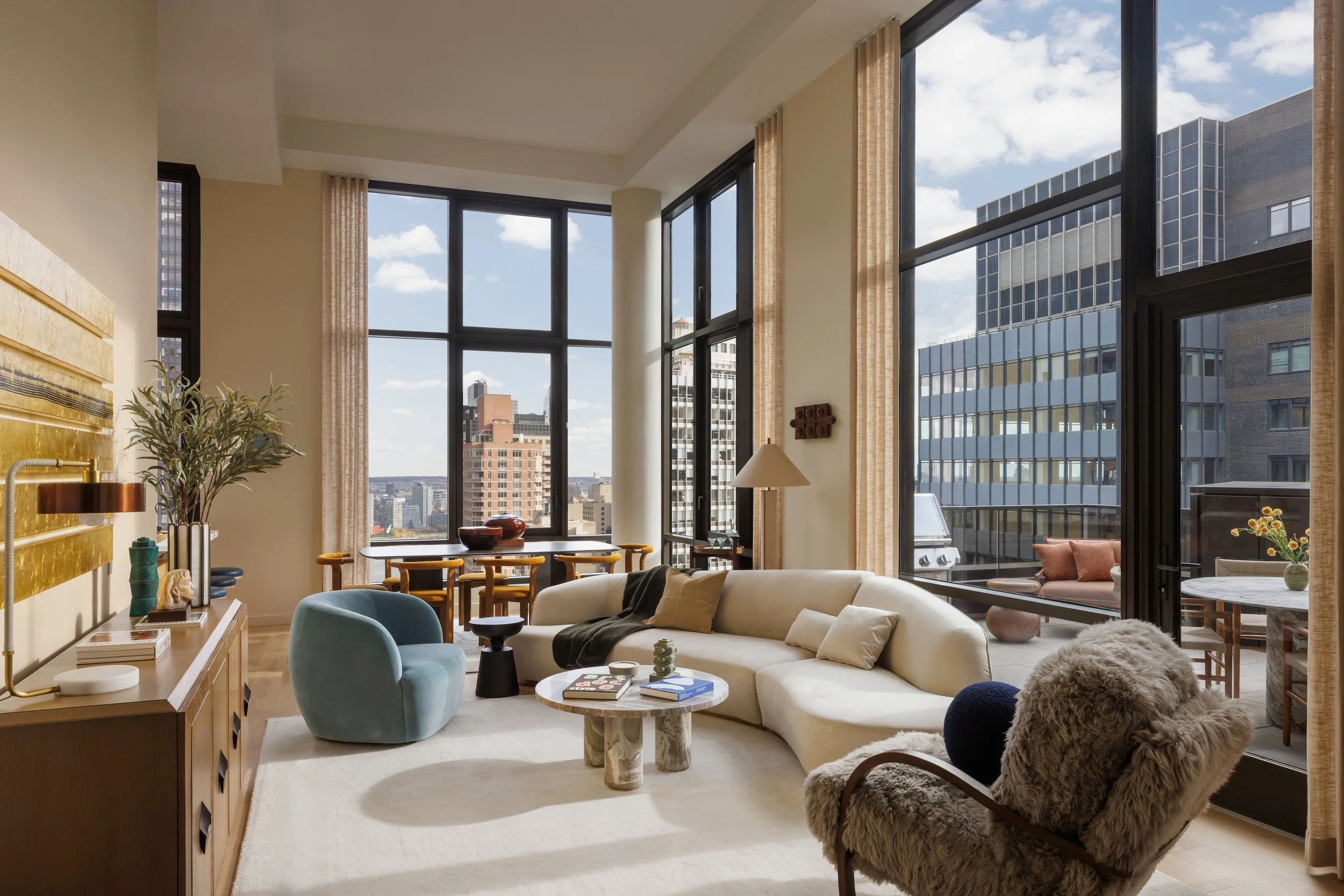
The main living area unfolds in sculptural simplicity: generous curves, low horizons, and layers of ivory, stone, and smoke. A cloud-like sofa anchors the space, its silhouette soft against the angular skyline. Two bouclé armchairs face it in a quiet dialogue of form and texture, while a monolithic travertine table catches the afternoon light like sculpture.

Against one wall, Elizabeth Ibarra’s The Invisible Weight of Being (2025) provides an intimate counterpoint — layered pigment and gesture suggesting introspection and the human pulse within the architectural frame.


What We Did

Interior Design 
Art Selection 
Custom Paint
Custom Window Treatments


THE SOFT GEOMETRY OF CALM

In the living room, dark bronze and ceramic side tables balance the composition, grounding the palette with material depth. A handwoven wool rug traces soft geometric patterns underfoot, tying together the architecture and furnishings with hushed precision.

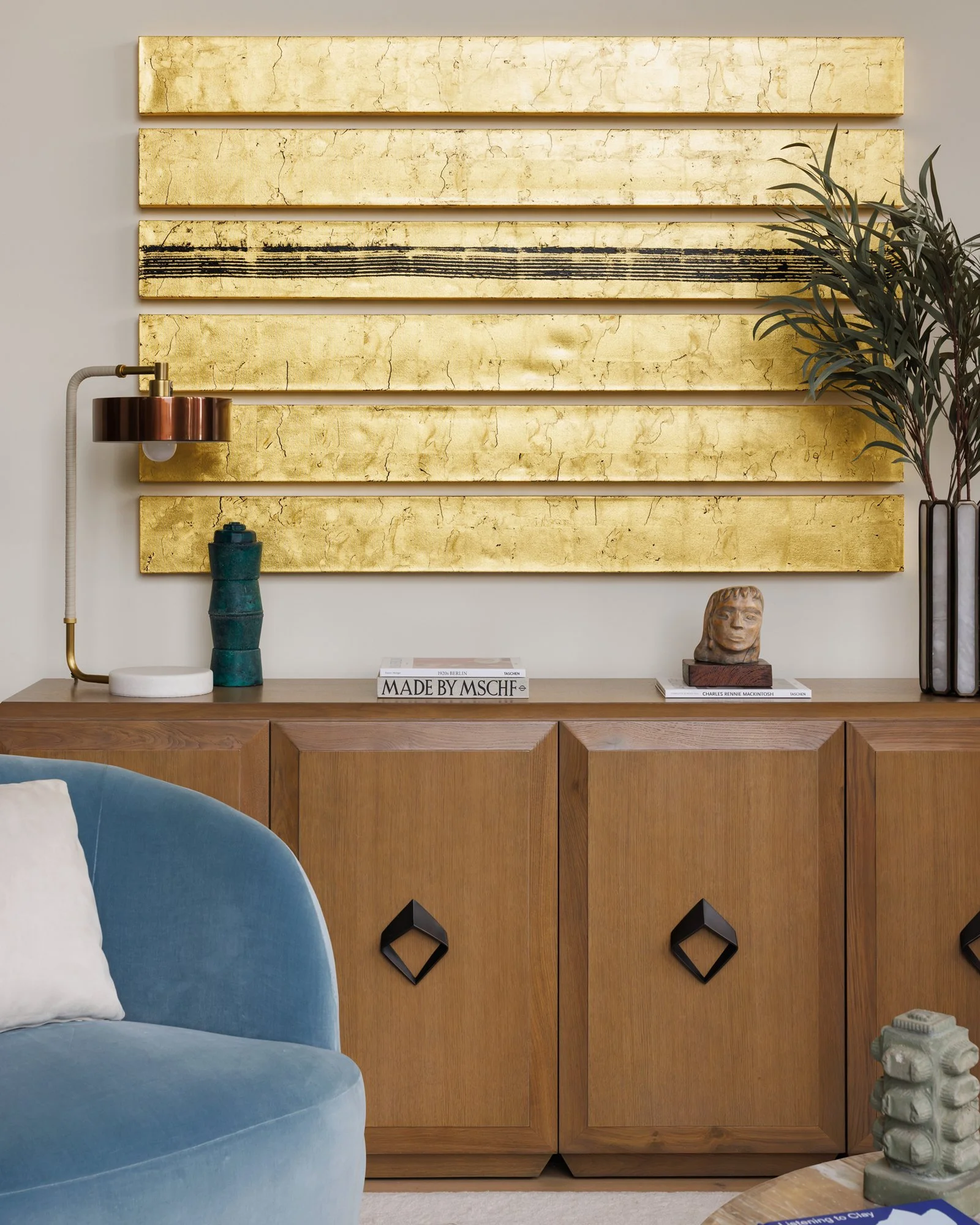
On the walls, Brian Harte’s Radiator (2017) and Marc Horowitz’s EGSTD (2024) introduce painterly tension — the friction between atmosphere and structure. Their tonal restraint echoes the room’s philosophy: a celebration of stillness as strength.


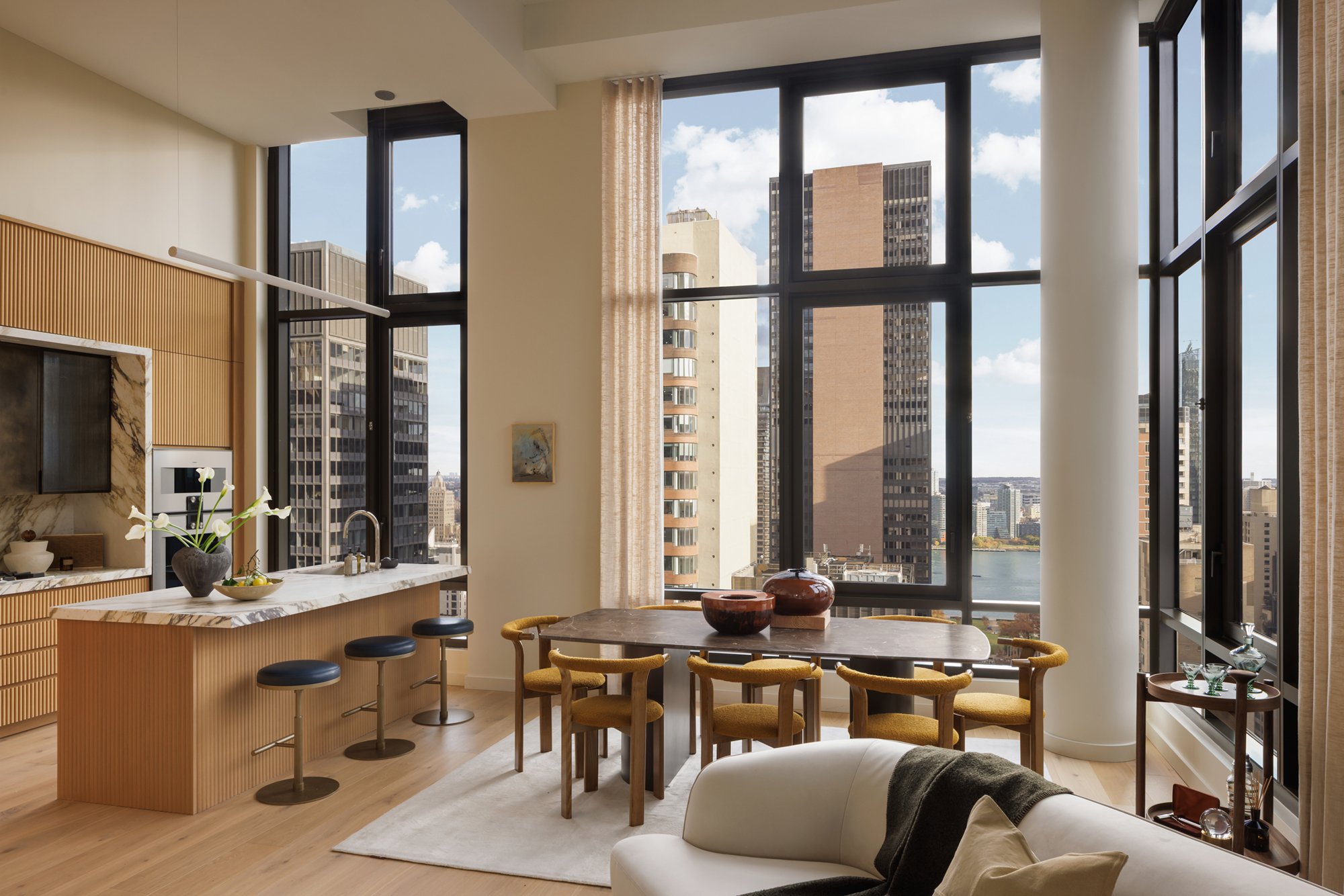
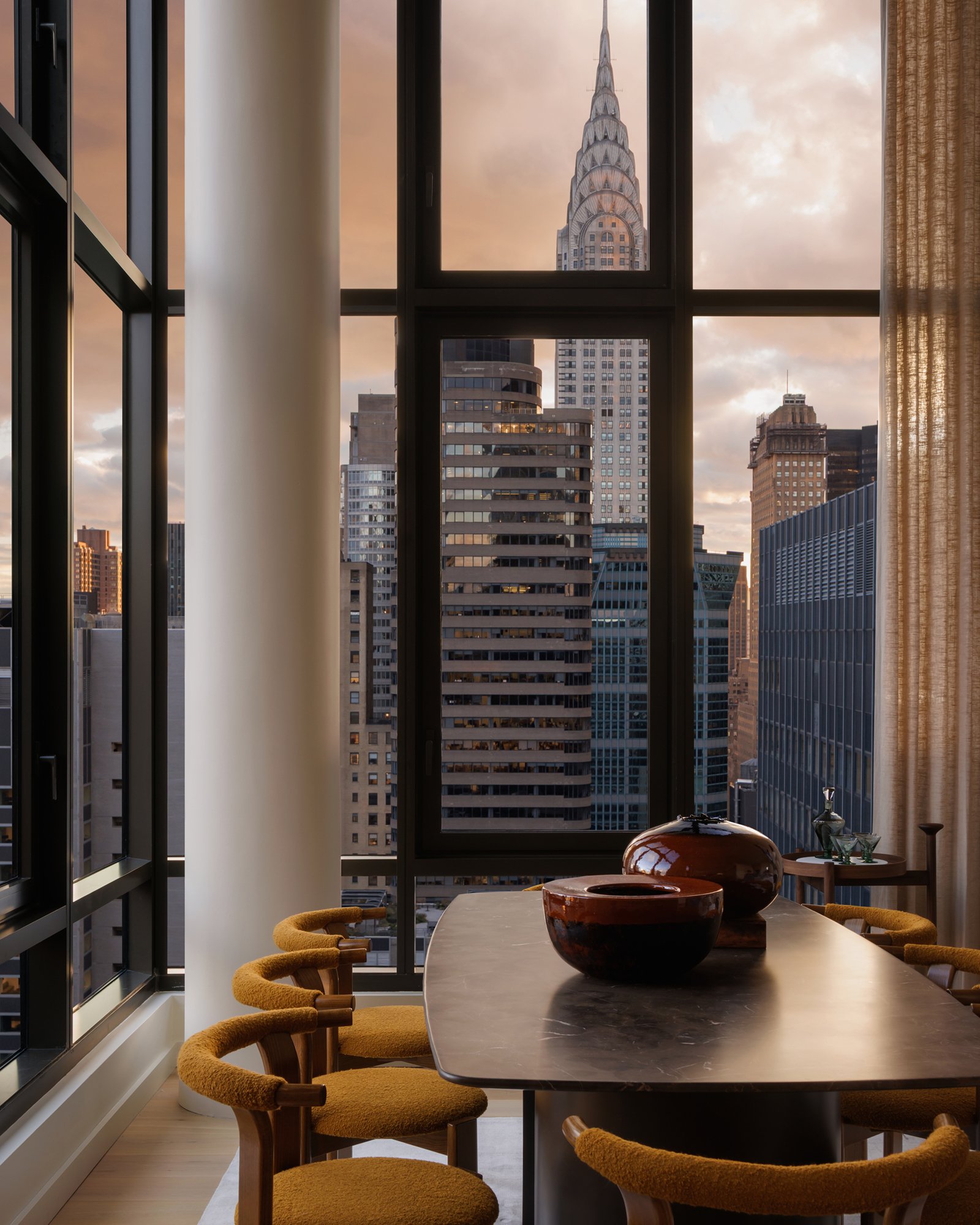
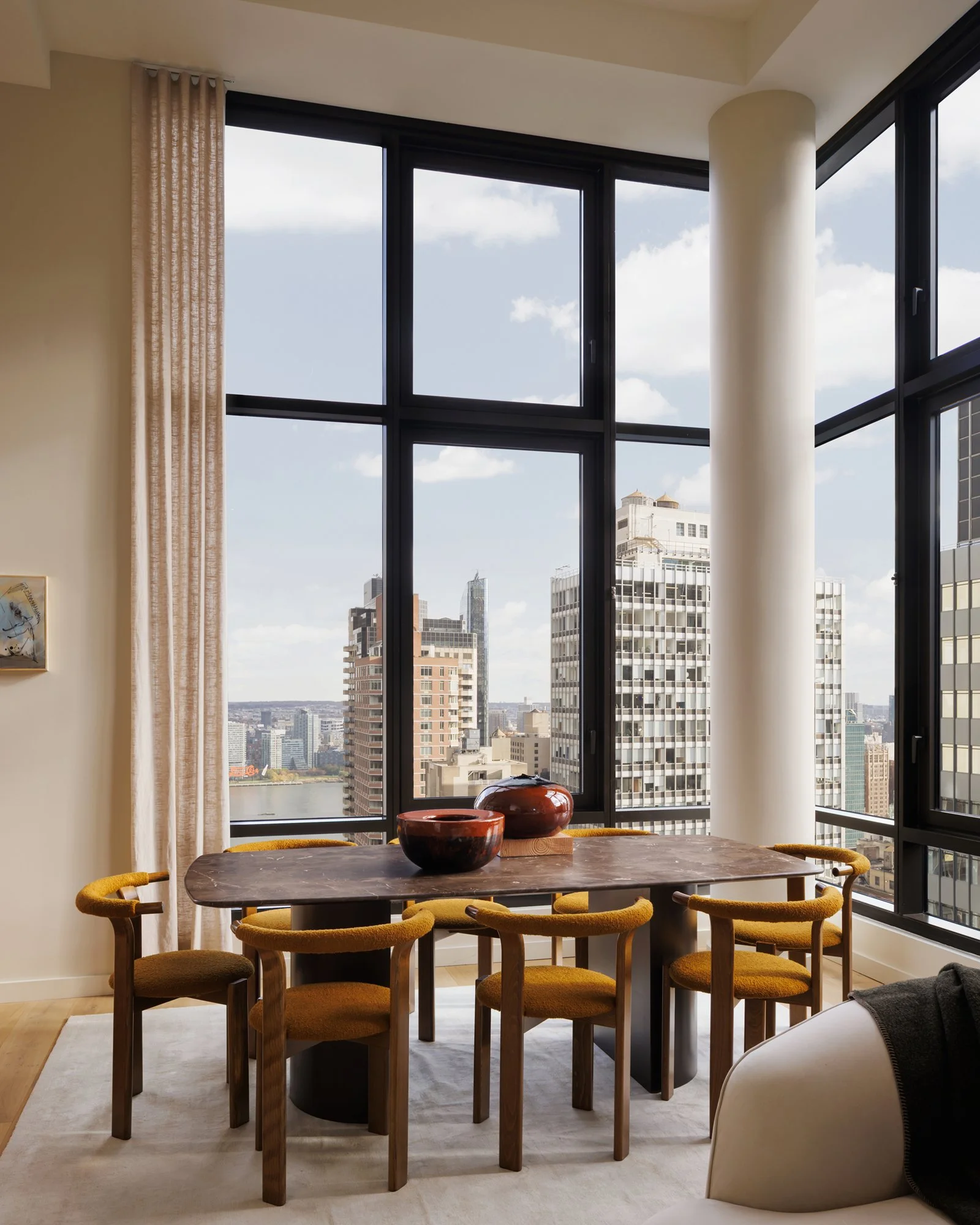
An oak dining table, tactile and generous, sits beneath a sculptural pendant that glows like a floating lantern. The seating is warm and timeless — natural wood and woven cord — where craftsmanship feels both familiar and elevated. The dining experience feels grounded yet open, balancing intimacy and proportion.


THE RHYTHM OF TRANSITION

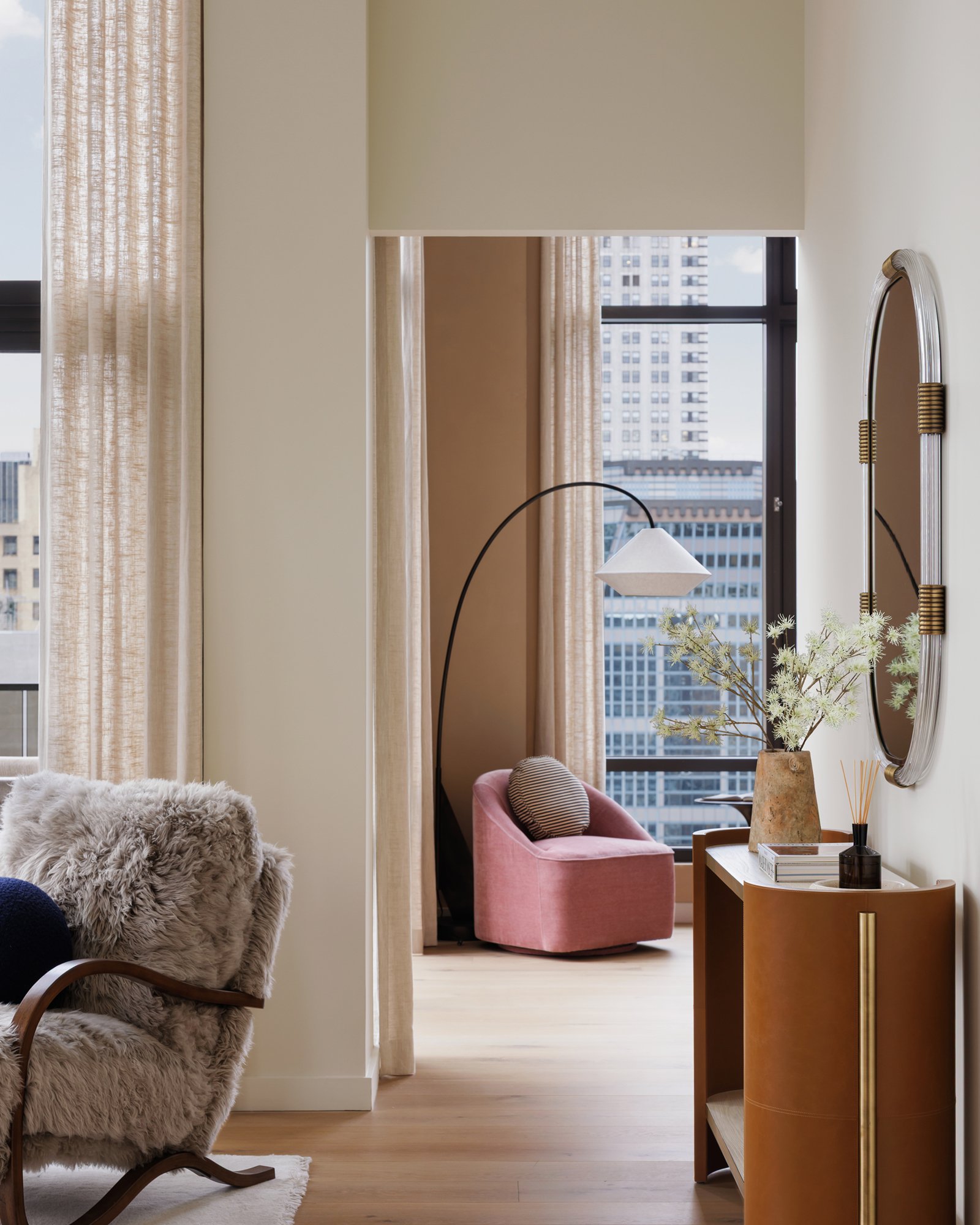
Leading toward the private quarters, the hallway becomes a quiet gallery. Here, Craig Boagey’s Sunken Hearts (2022) commands attention — its abstract movement and layered warmth animating the passage between shared and private space. The work acts as both guide and pause, carrying the energy of conversation from the public rooms into the more intimate ones beyond.


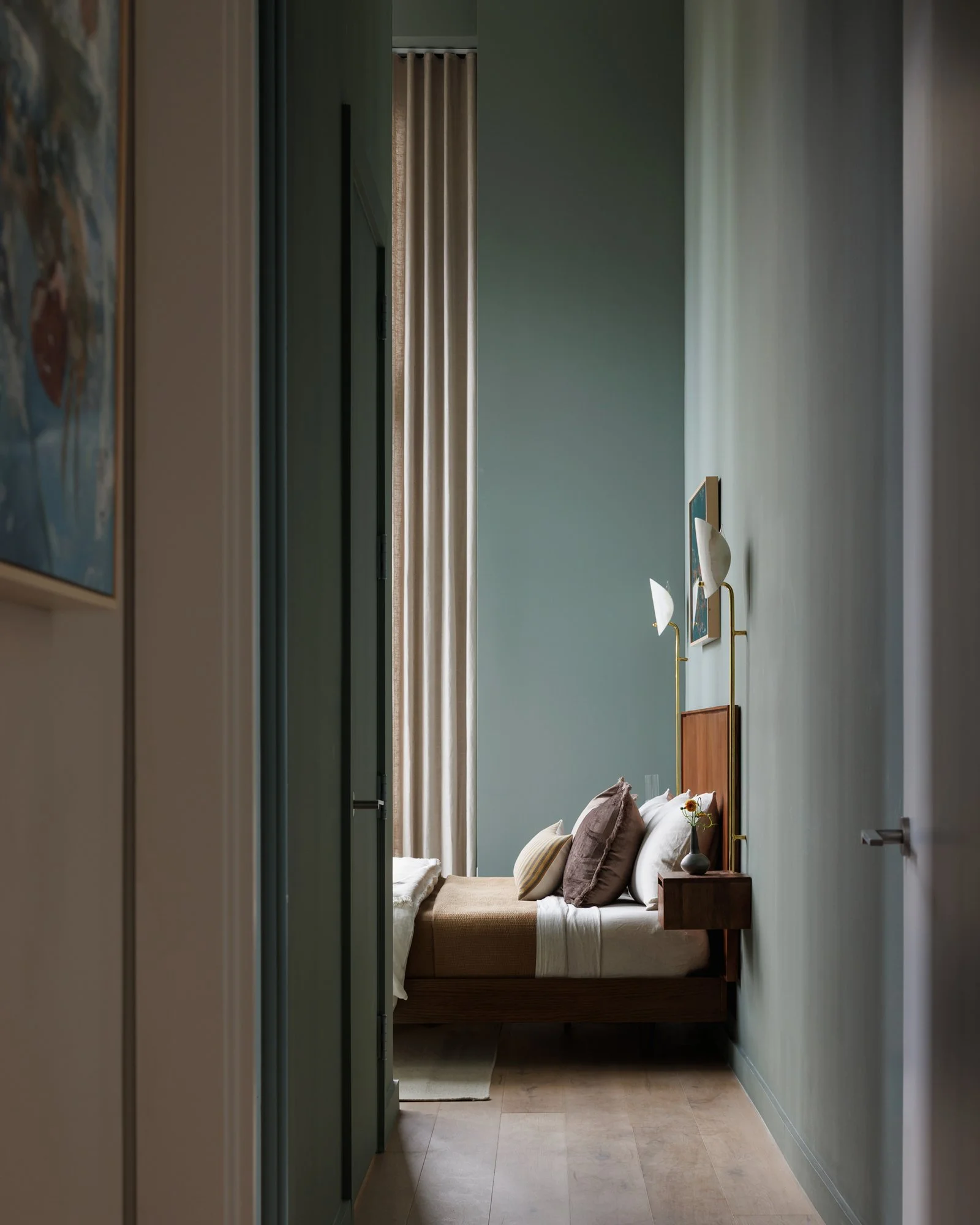
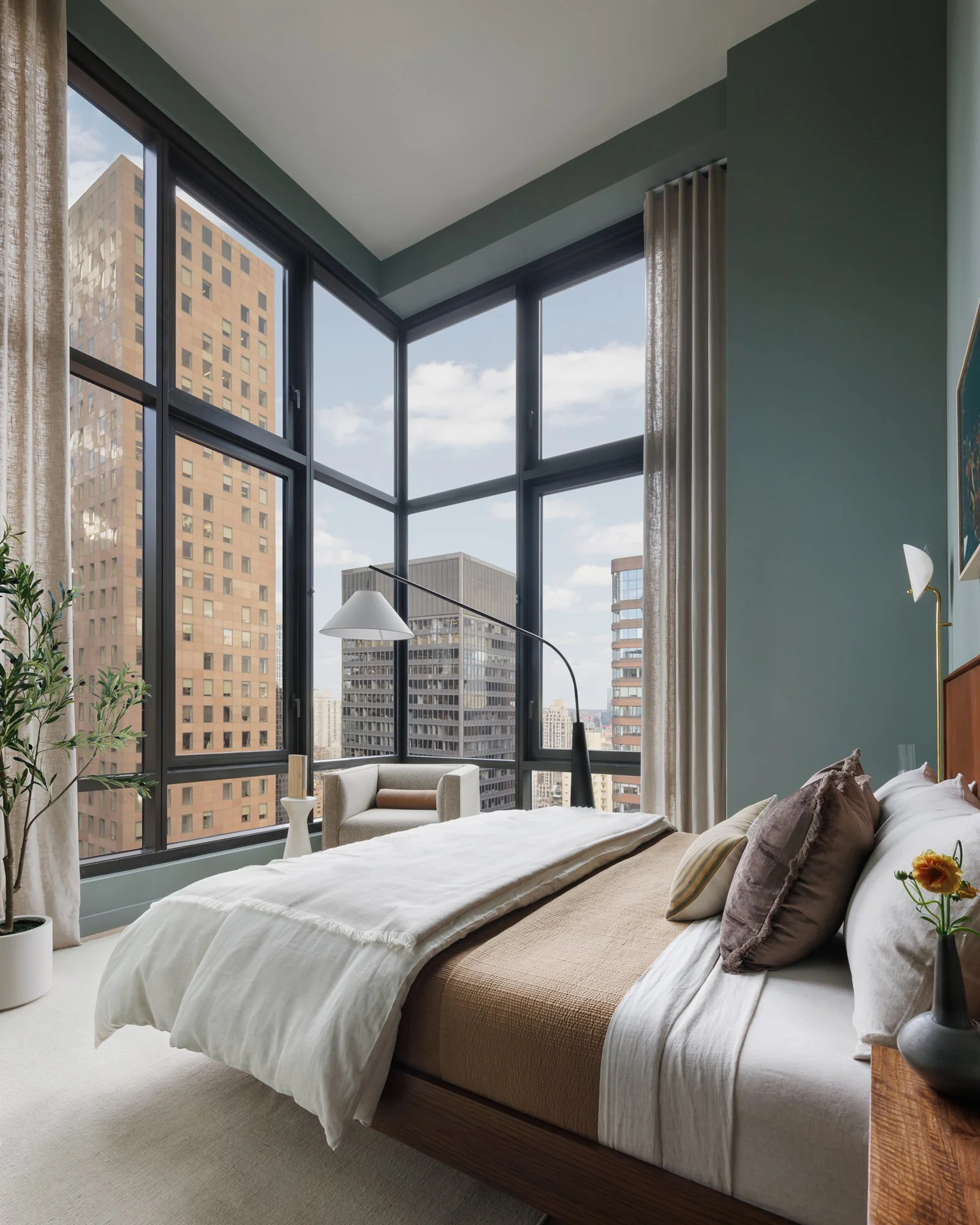
The primary bedroom transforms light into architecture. A low, upholstered bed in pale linen softens the geometry of the space, flanked by marble-topped nightstands and warm, glowing orbs of light. Each surface reflects restraint — stone, brass, and woven wool arranged in quiet dialogue. The effect is meditative — a room that invites exhale, a private landscape of tone and texture.


A ROOM FOR THOUGHT & PAUSE

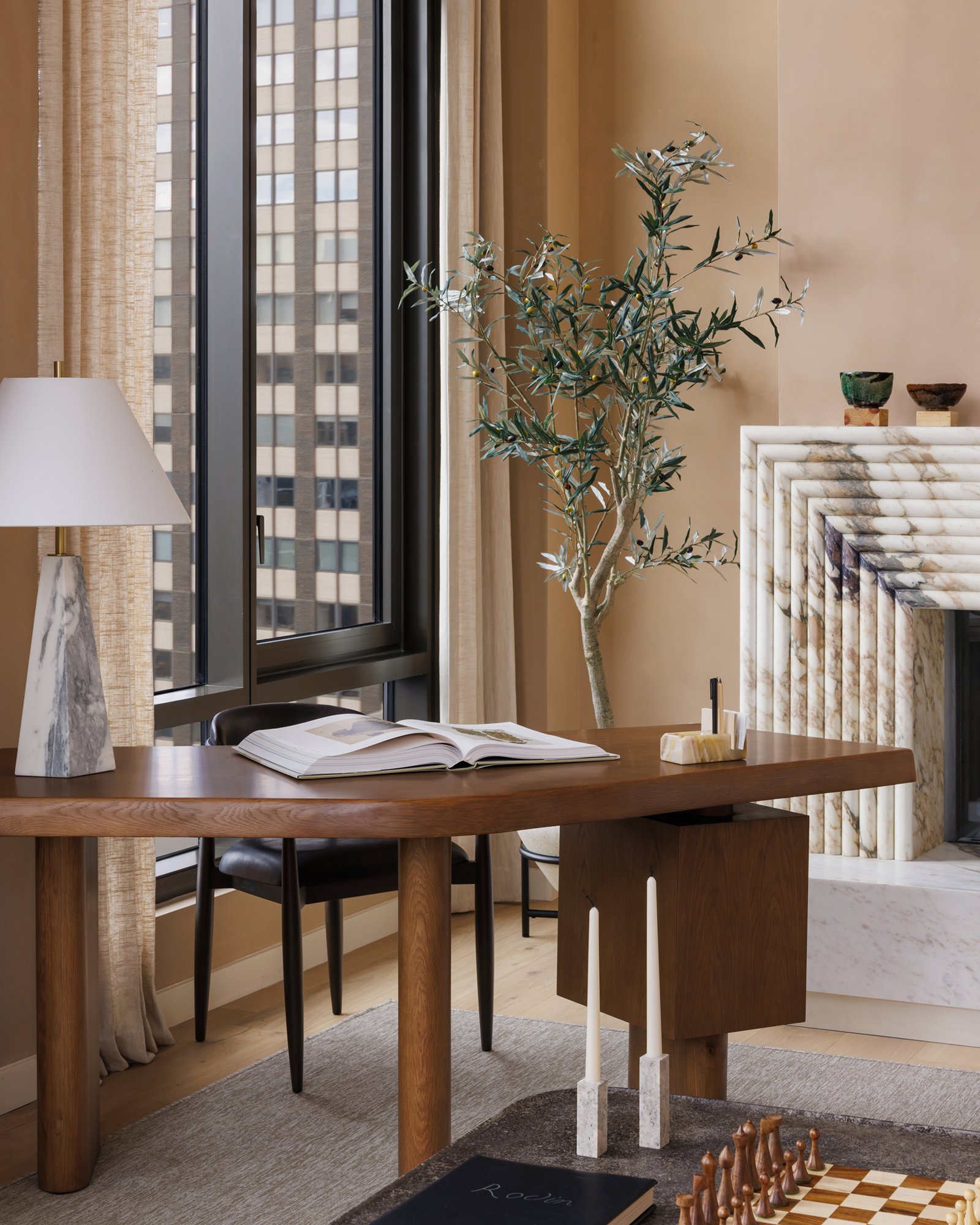
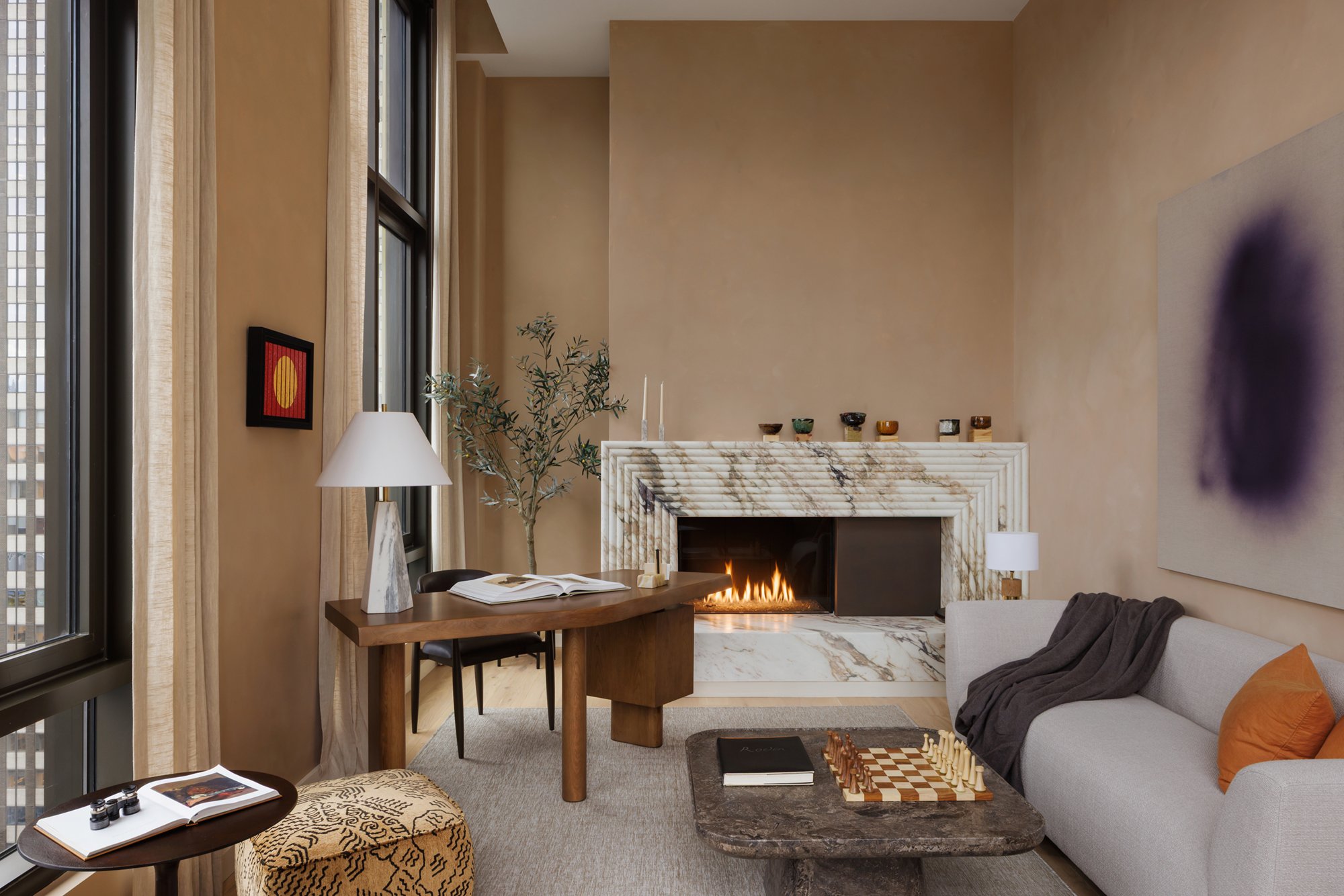
The secondary bedroom reimagines itself as a flexible sanctuary — equal parts workspace and quiet retreat. A slender oak desk meets a sculptural ergonomic chair, while a linen daybed stretches along the wall for reading or repose.


Objects are minimal, selected with care: a curved glass lamp, a wool rug, a small ceramic vessel catching morning light.


THE LUXURY OF REFLECTION

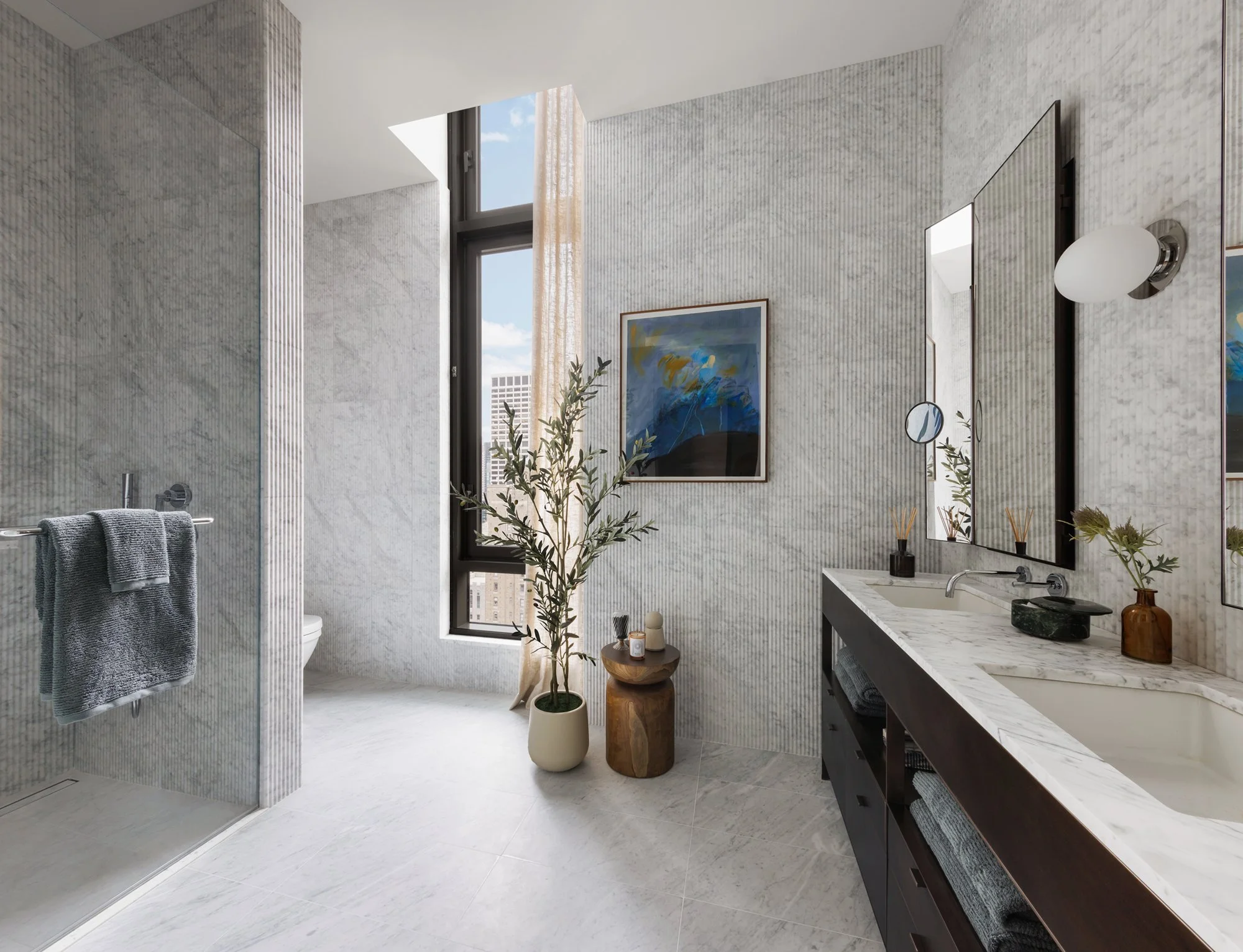
In the private bath, Elizabeth Ibarra’s Untitled (Blue Planet) (2022) brings an unexpected layer of luxury. Her abstract composition, rich in movement and hue, mirrors water and light — transforming the space into a serene, almost spiritual environment. Placed above the stone vanity, the painting elevates ritual into art, echoing the Monogram ethos of beauty through simplicity.


THE SKY AS COMPANION

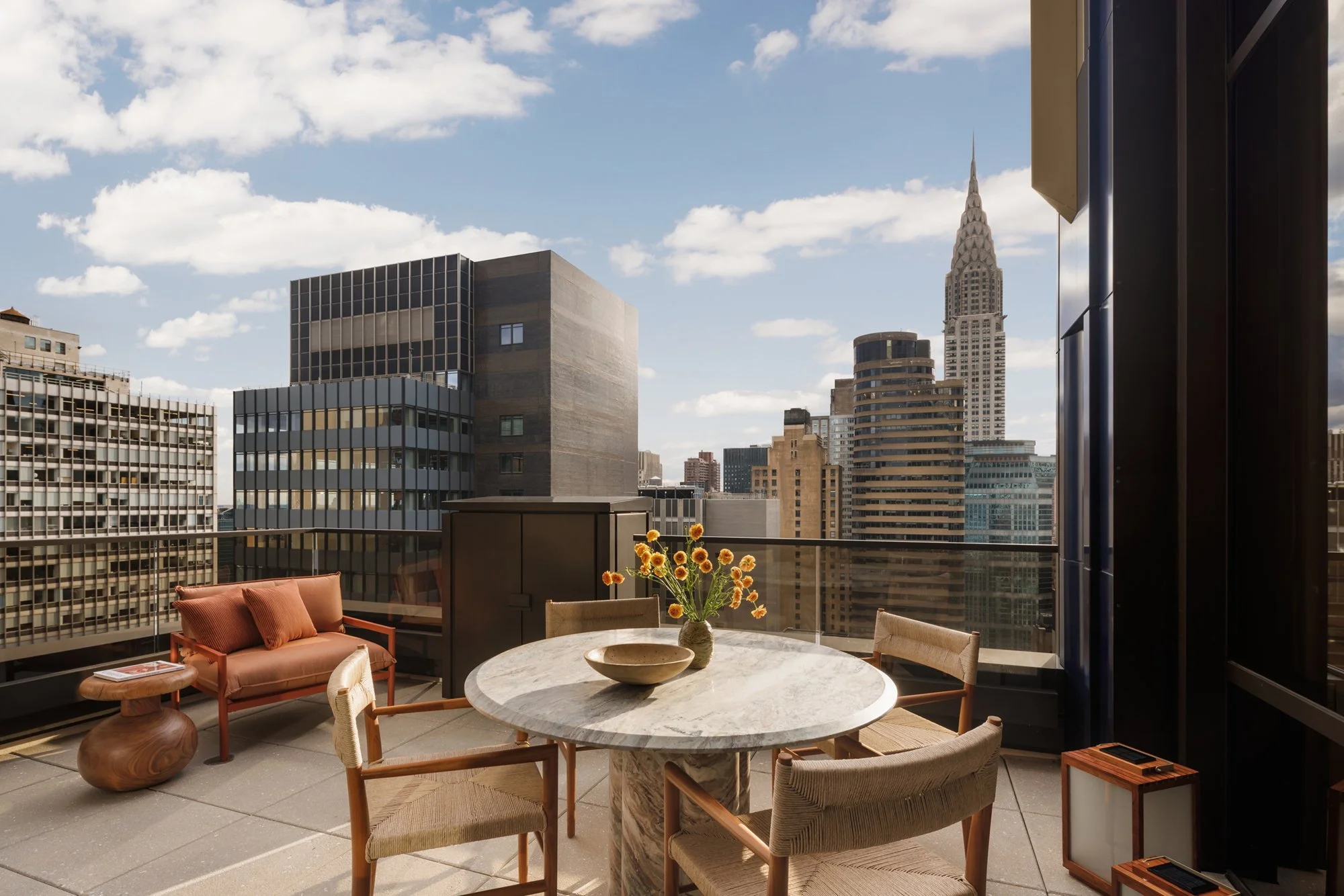
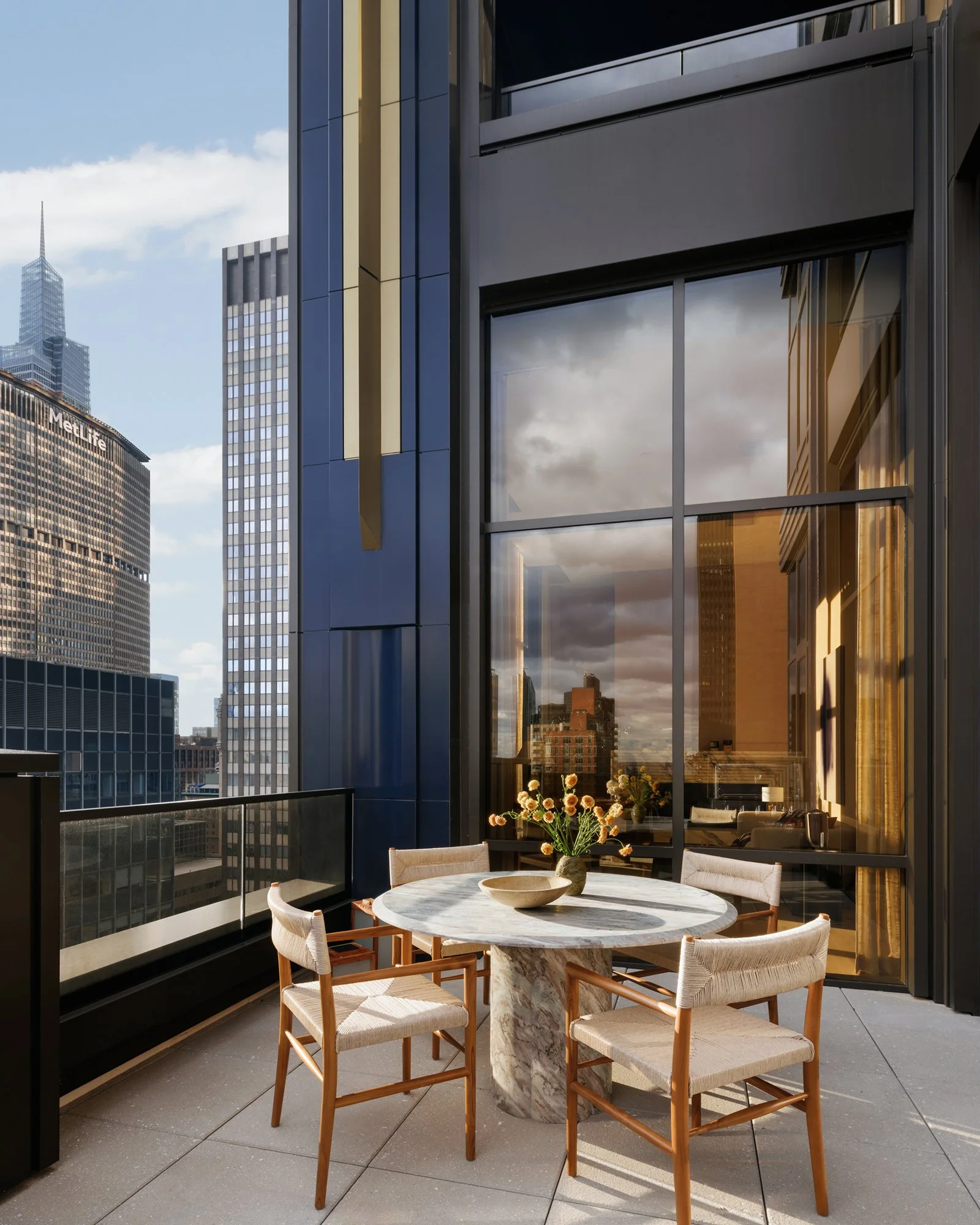
Beyond the glass, the terrace extends the interior palette into open air. Neutral canvas seating and sand-toned tables echo the materials within, while soft greenery in sculptural planters bridges architecture and nature.


It is both a viewing platform and a retreat — a quiet observatory where the skyline feels like a living masterpiece.

 
Previous
Previous

The Harrison Penthouse

Next
Next

West Village Townhouse